
Raj College of Pharmacy
Approved by PCI New Delhi
Raj College of Pharmacy offers students the best hands-on experience possible, preparing them for the industry. We offer the pharmacy students all the labs they need, complete with the necessary instruments and equipment and a well-ventilated area for conducting practical research. We follow Standard Operating Procedure (SOP) and hygiene is upheld in every laboratory.
Pharmacology lab
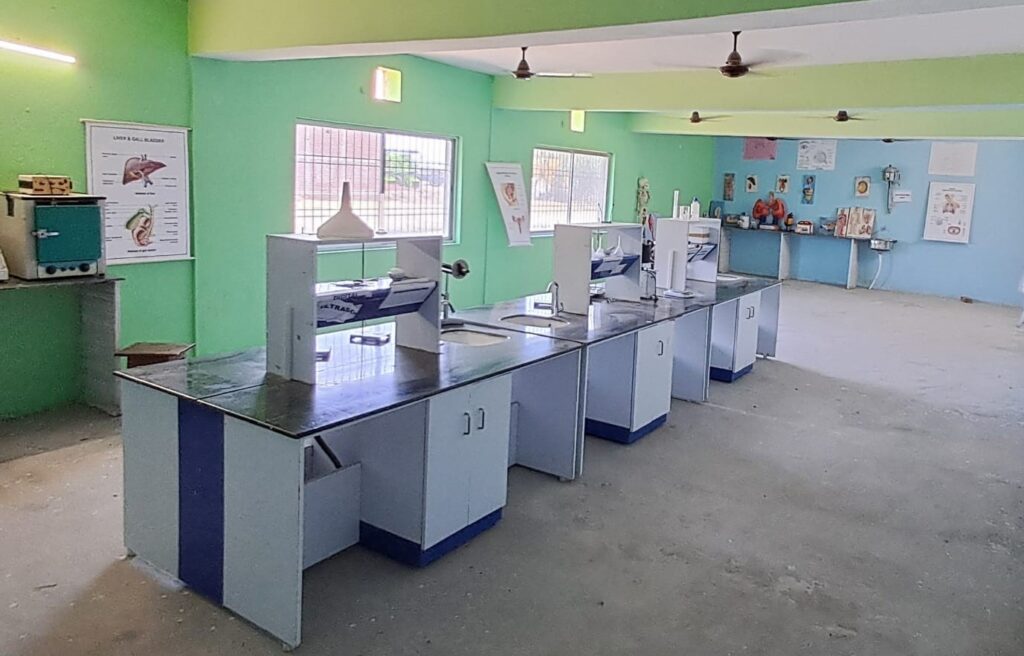
In pharmacy studies, the pharmacology lab is essential in forming the knowledge and proficiency of aspirant pharmacists. By enabling students to practically observe and understand the actions, effects, and mechanisms of numerous drugs, it acts as a bridge between academic knowledge and industry applications.
Pharmacology lab is utilized for studying pharmacodynamics (the effects of medications on the human body) in addition to experimental learning. By using a variety of models and simulations, they also make it possible to compare the potency and effectiveness of drugs. Students who work in the lab develop the confidence, accuracy, and scientific reasoning that are essential in any clinical or pharmaceutical context.
Human Anatomy & Physiology (HAP) Lab
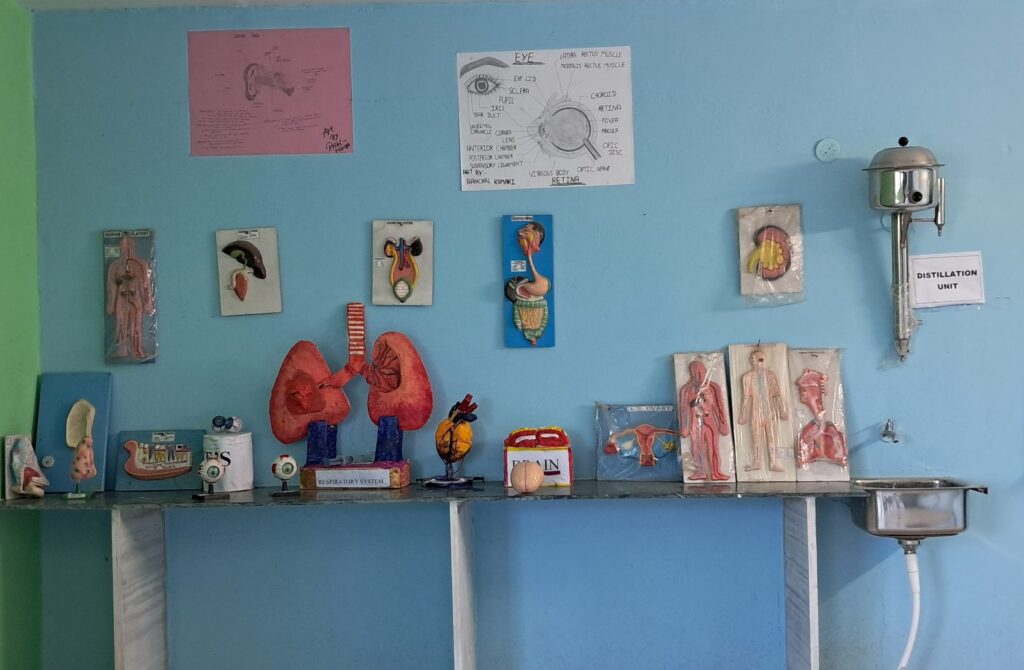
The Human Anatomy & Physiology ( HAP ) Lab provides students with an in-depth grasp of the anatomy and physiology of the human body, which is crucial knowledge for every position in healthcare or pharmaceuticals.
Anatomical models, dissection specimens, charts, and digital simulations are used in this lab to connect theoretical ideas with hands-on learning. Students who study the organs, tissues, and systems of the human body learn how the body works in both healthy and ill conditions, which provides a solid basis for more complex subjects like clinical pharmacy, pharmacology, and pathology.
Pharmaceutical Analysis Laboratory
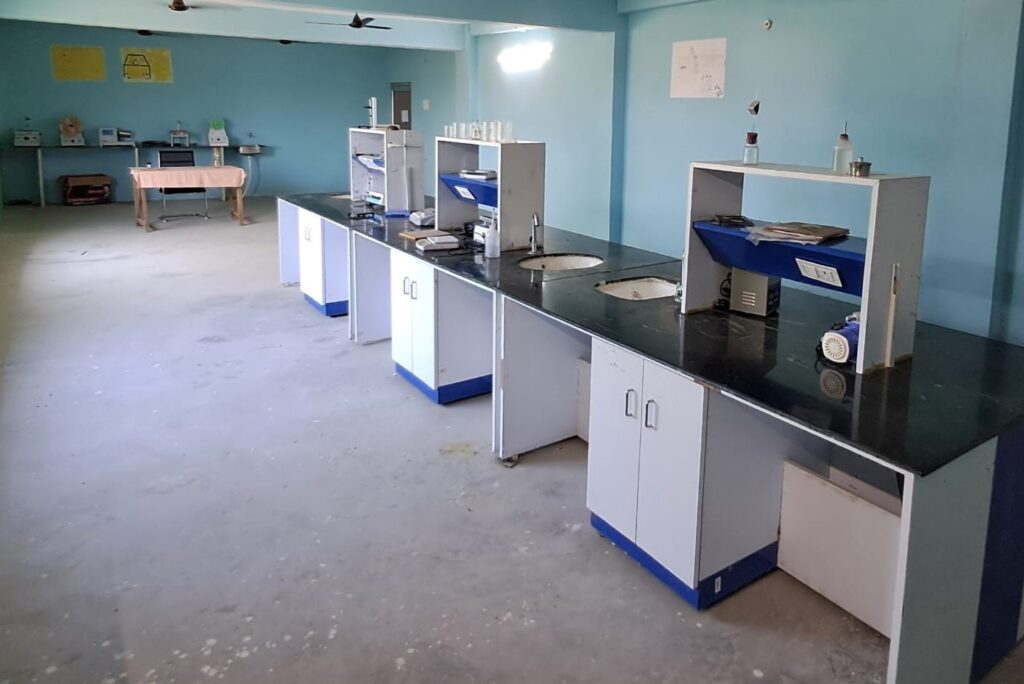
An integral part of any pharmacy college’s academic and research is the Pharmaceutical Analysis Laboratory. This lab at our institute has been carefully planned to give students a comprehensive grasp of the concepts and procedures related to the qualitative and quantitative analysis of pharmaceutical compounds. It is essential for helping students become competent in guaranteeing the efficacy, safety, and quality of pharmaceutical products. They cover things like redox titrations, non-aqueous titrations, limit tests for contaminants, volumetric analysis, and gravimetric analysis, and the use of experiments is overseen by knowledgeable faculty members who make sure that standard operating procedures and laboratory safety regulations are followed.
Regulatory compliance and Good Laboratory Practices ( GLP ) given special attention, which aids students in comprehending the practical demands of the pharmaceutical industry and regulatory organizations such as the FDA, WHO, and ICH.
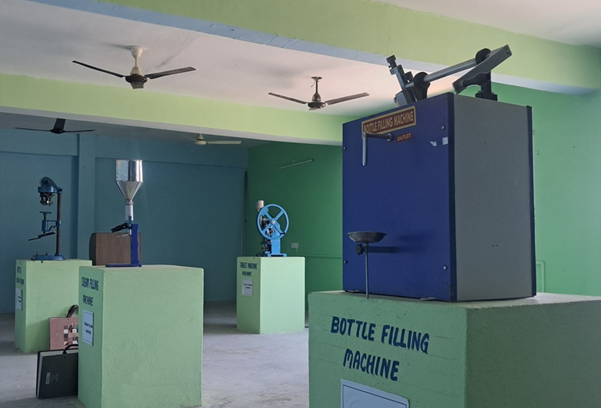
Pharmaceutical Engineering Lab ( Machine Room )
The pharmaceutical engineering laboratory and machine room are essential components of any pharmacy college’s technical and academic infrastructure. The purpose of these facilities is to give students practical experience in both basic and advanced pharmaceutical production procedures. Pharmacy: those who hope to engage in manufacturing, production, and formulation development within the pharmaceutical sector.
Key manufacturing equipment such as tablet punching machines (single and multi-station), capsule filling machines, rotating tablet machines, coating pans, and mixers are all included in the machine room, which simulates industrial-scale activities. Students learn about production line efficiency, process control, maintenance, and safety regulations adhered to in the pharmaceutical sector by working with these machines.
Pharmacognosy Laboratory
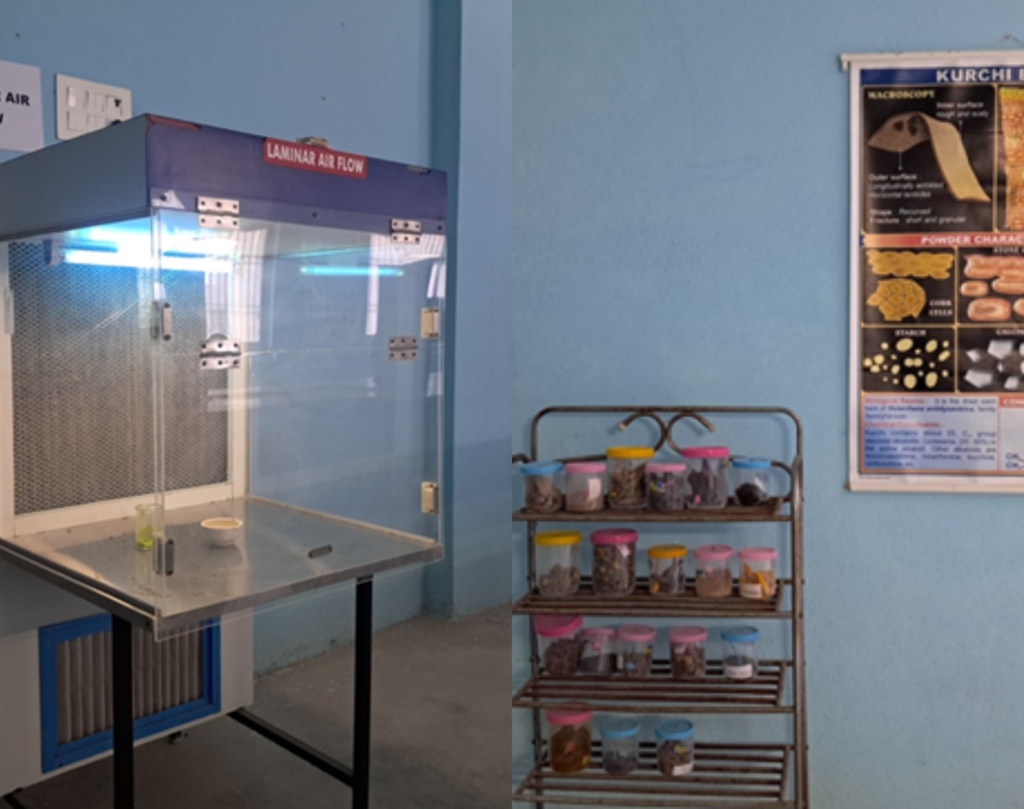
A key element of pharmacy education, the pharmacognosy laboratory is essential to comprehending medications made from natural sources. One of the oldest and most important fields in pharmaceutical sciences is pharmacognosy, or the study of therapeutic plants and natural materials. The lab gives students practical experience in the identification, assessment, and analysis of crude pharmaceuticals derived from minerals, plants, and animals.
Installing information regarding standardization and adulteration detection of herbal drugs—a crucial area of concern in herbal medicine and Ayurvedic formulations—is one of the lab’s primary responsibilities. Additionally, students learn about pharmacopoeial techniques and official guidelines for crude drug analysis.
In addition to bridging the gap between theory and practice, the pharmacognosy lab promotes an understanding of ancient medical systems such as Ayurvedic, Unani, and Siddha. It provides a springboard for professions in natural product chemistry, phytopharmaceuticals, herbal product quality control, and medication research.
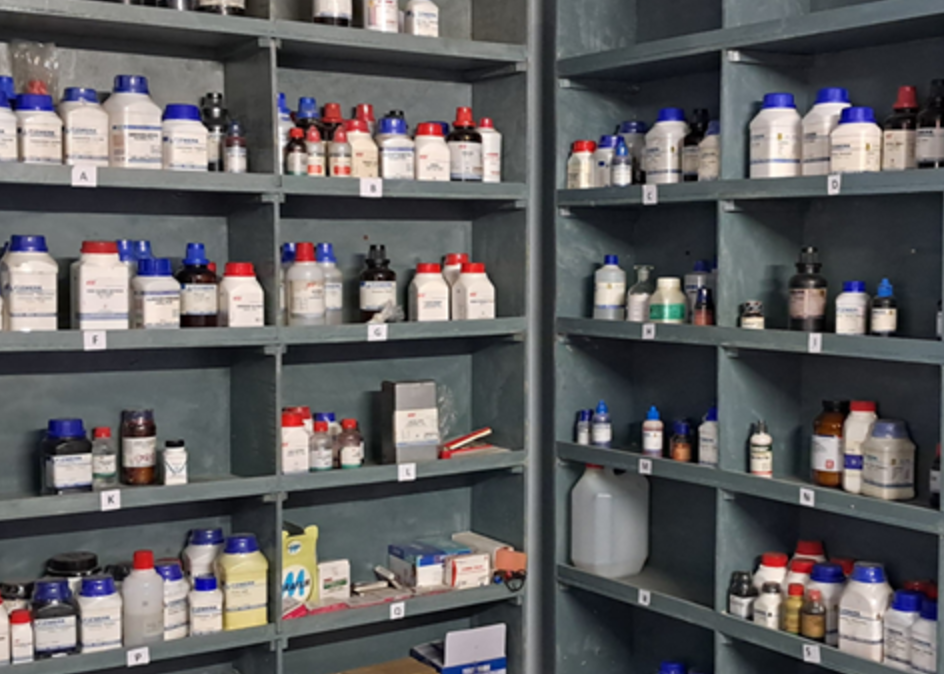
Pharmaceutical Chemistry Laboratory
An essential component of a pharmacy institute is the pharmaceutical chemistry laboratory. which includes both organic and inorganic chemistry. It gives students the crucial practical experience they need to analyze and comprehend the properties, interactions, and chemical makeup of pharmaceuticals. For many pharmacy courses and business applications, this lab serves as the scientific foundation.
Students can identify and analyze a variety of inorganic substances used in pharmaceuticals, including metal salts, antacids, and electrolytes, in the inorganic chemistry lab.
In organic chemistry lab students are introduced to the synthesis, purification, and identification of organic medical substances. To comprehend the structure and behavior of pharmacological molecules, experiments like recrystallization, distillation, determining melting and boiling points, and functional group analysis are carried out. These methods set the stage for additional research in drug design and medicinal chemistry.
Pharmaceutics Laboratory
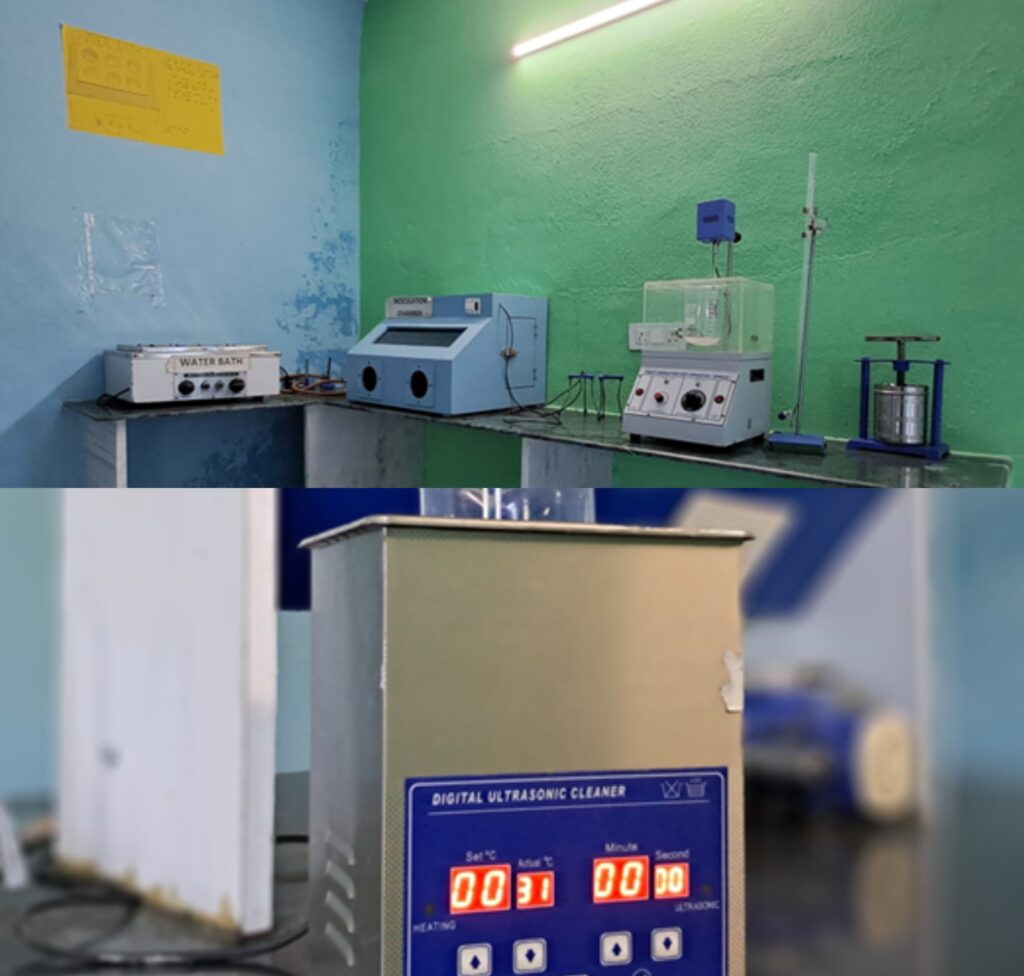
The Pharmaceutics Laboratory gives students a thorough grasp of the creation, testing, and production of pharmaceutical dosage forms. It provides the hands-on basis for students to understand how to convert active pharmaceutical ingredients (APIs) into medications that are acceptable, safe, and effective for patient usage.
Teaching students how formulation elements, excipients, and processing conditions affect the stability, bioavailability, and efficacy of pharmaceuticals is one of the main goals of this lab. Students conduct tests pertaining to drug release testing, tablet compression, powder flow characteristics, preformation investigations, and topical formulation production. Understanding the intricate science underlying drug delivery systems requires these practical experiences.
Additionally, the pharmaceutics lab facilities research and project work in which students investigate cutting-edge medication delivery methods such as mucoadhesive formulations, transdermal patches, and sustained-release tablets. This encourages creativity and equips students for positions in production, R&D formulation development, and regulatory affairs.